


Logbook Scuba Dive # 362 - USS Saratoga (CV-3)
| Logbook Scuba Dive # 362 - USS Saratoga (CV-3) |
 Good
Good| Cylinder Set #1 | |||
| Cylinder Type: | Cylinder Size: | Working Pressure: | Supply Type: |
| Steel |  24 litres 24 litres |
300 bar |  Open Circuit (OC) Open Circuit (OC) |
| O2: | He: | Min. PPO2: | Max. PPO2: |
| 21% | 0% | - | 1.4 bar |
 EAN 21 EAN 21 |
MOD: | EAD: | END: |
| 56.6 m | 56.6 m | 56.6 m | |
| Start Pressure: | End Pressure: | Diff. Pressure: | |
| 250 bar | - | - | |
| Avg. Depth: | SAC Rate: | ||
| - | - | ||
| Cylinder Set #2 | |||
| Cylinder Type: | Cylinder Size: | Working Pressure: | Supply Type: |
| Alumimium |  11 litres 11 litres |
200 bar | Open Circuit (OC) |
| O2: | He: | Min. PPO2: | Max. PPO2: |
| 50% | 0% | - | 1.6 bar |
| EAN 50 |
MOD: | EAD: | END: |
| 22.0 m | 10.3 m | 22.0 m | |
| Start Pressure: | End Pressure: | Diff. Pressure: | |
| 200 bar | - | - | |
| Avg. Depth: | SAC Rate: | ||
| - | - | ||
| Cylinder Set #3 | |||
| Cylinder Type: | Cylinder Size: | Working Pressure: | Supply Type: |
| Steel | 7 litres |
232 bar | Open Circuit (OC) |
| O2: | He: | Min. PPO2: | Max. PPO2: |
| 95% | 0% | - | 1.6 bar |
| EAN 95 |
MOD: | EAD: | END: |
| 6.8 m | -8.9 m | 6.8 m | |
| Start Pressure: | End Pressure: | Diff. Pressure: | |
| 200 bar | - | - | |
| Avg. Depth: | SAC Rate: | ||
| - | - | ||
| Avg. Depth: | SAC Rate: | ||
| - | - | ||
| Gas Mixture: | |||
| - | |||
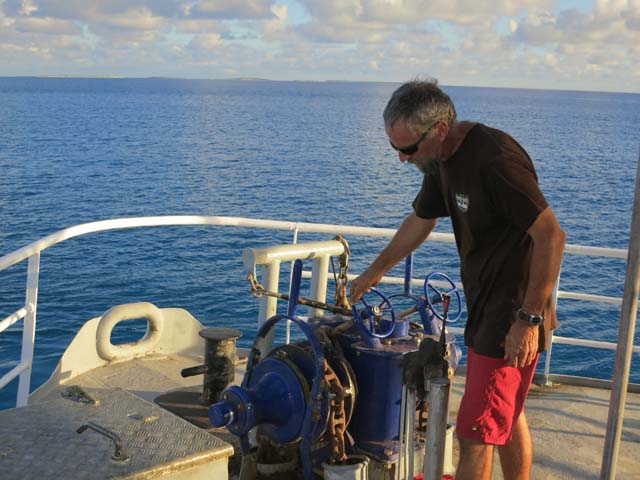
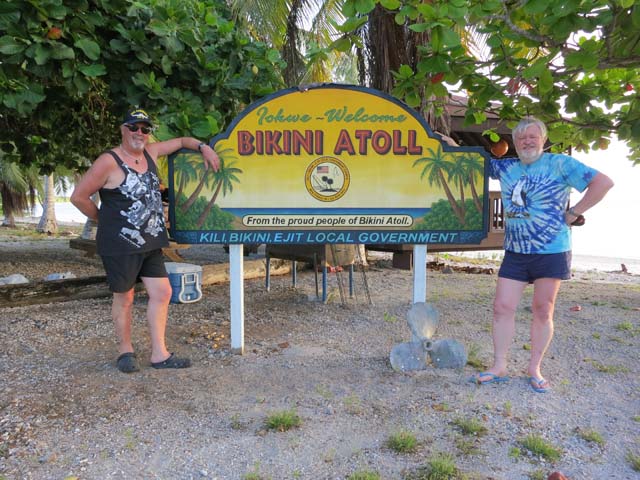
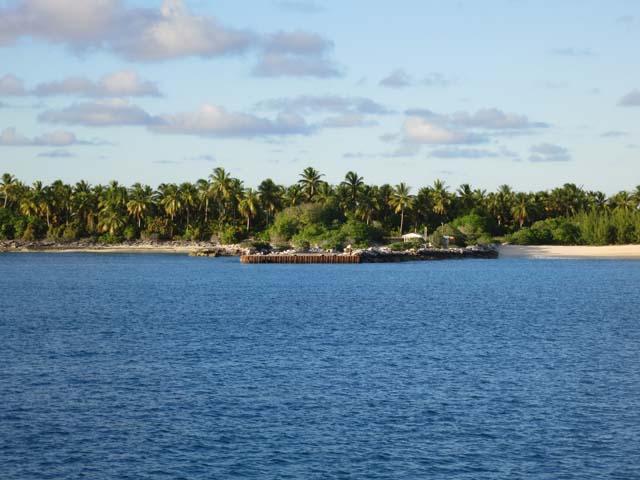
| We arrived at the anchorage site off Bikini Island late Monday afternoon. Stuff the shark curfew - be out of the water between 1700 hrs and 0800 hrs, feeding time - I jumped in to cool off from the tropical heat. After dinner on MV Windward, the four Aussies transferred to Bikini Island, where we stayed each night in a four-room accommodation block with running water, toilets, showers, and air conditioning. The Bikini people created it for the once successful, but now defunct, land-based dive operation that was to be an economic saviour for the Bikini people. Edward Maddison, our Bikini dive master, showed us around the almost deserted ghost town with great pride. Typically, only four to six people are living at Bikini Atoll for six months at a time, as a skeletal caretaker staff to look after the remaining facilities. There is a poignant sign above the entrance to the machine shop that reads, "WE CAN FIX EVERYTHING EXCEPT BROKEN HEART." It was sad to see the accommodation blocks, large kitchen and dining room, dive shop, dive briefing room and theatre on the island all sitting there unused and slowly deteriorating since the land-based diving operation closed in 2008. The trees in the coconut plantations have mounds of dropped coconuts at their bases. Not to be eaten. You could stare at this tropical scene for as long as you want, but you won't see the hidden danger. The soil, while not dangerous to touch, still contains the radioactive isotope Caesium-137. The danger is that plant life, as well as any animal life that feeds on the plants, absorbs the Caesium-137 and concentrates it. So you can only eat food transported in or caught in the sea. The fresh water on the island is manmade and safe to drink. Sitting on the porch each morning, watching the sun come up at around 5:30 am over the staggering beauty of the immaculate, deserted white-sand beach and tranquil lagoon at Bikini Atoll, was like being in heaven on earth. The only sounds I could hear came from the seabirds wheeling above me and the lap-lap of waves on the sand. I have not seen a nicer beach anywhere in the world. There are no flies or mosquitoes on Bikini. And yet, we were there to see the vestiges from an atomic hell that lay deep below the surface of Bikini Lagoon. OLD "SARA" On Tuesday morning, we transferred back onto the MV Windward, had breakfast, and then listened to a comprehensive history lesson and dive briefing by Brian Kirk, another dive master, and Peter Fear as we headed out to moor on the site of the USS Saratoga (CV-3) aircraft carrier. She is a steel-hulled vessel with a waterline length of 253 metres, a flight deck length of 270 metres, a beam of 33 metres, and officially weighing 37,000 standard tons. Designed to carry 78 aircraft of various types, including 36 bombers, she is BIGGER than the SS President Coolidge and the Titanic! In February 1945, Saratoga carried night fighters during the Iwo Jima invasion and raids on the Japanese home islands. After the war, in 1945, she transported more than 29,000 servicemen back home to the states, and in 1946, she was brought in for target duty at Bikini Atoll. "Sara" survived the "Test Able" atomic blast on 1 July 1946 with only minor damage, notably the burning of the teak on her flight deck. Saratoga was severely damaged by the "Test Baker" underwater atomic blast, which was detonated just 370 metres from the carrier on 25 July 1946, and she sank sometime after. The best of the three "dive-able" aircraft carriers in the world, she lies upright in 50 metres of water. The superstructure is at 18 metres, the flight deck at 28 metres, and the aeroplane hangars at 39 metres. We followed the mooring line down to the flight deck near the bow and then made our way forward. Judging then commenced for the best dive from the bow into the vastness beyond. The sight of the upright bow of the massive warship was simply magnificent. After taking it in for a few minutes, we headed over to the starboard side and then made our way back to the tower. We checked out a brass diver's helmet along the way. We then explored the control tower, penetrating inside to the bridge where the normal portholes were lined up against the front wall, having been replaced with blast portholes with small slits, presumably used when the ship was in battle or under attack. Swimming along the flight deck as we headed back to the bow, I couldn't resist the temptation to mimic a bomber plane taking off. You could really feel the expanse of this massive ship. And yet, we'd barely covered the forward half of it on this first dive. |
|||
|
|
|||
| Field1 | |||
| - | |||
| Field2 | |||
| - | |||
| Field3 | |||
| - | |||
| Field4 | |||
| - | |||
| Field5 | |||
| - | |||
| Field6 | |||
| - | |||
| Field7 | |||
| - | |||
| Field8 | |||
| - | |||
| Field9 | |||
| - | |||
| Field10 | |||
| - |